What Can You Do with a Sound Healing Certification? A Realistic Look at Career Paths and Earning Potential
What Can You Do with a Sound Healing Certification? A Realistic Look at Career Paths and Earning Potential
By Dr. Danielle Hall, PhD | SoundEmbrace Institute
You felt something shift during a sound bath. Maybe it was the first time your nervous system fully exhaled in years. Maybe it was the moment you realized this was more than music, that something biological was happening. And somewhere in that experience, a thought crept in: Could I do this?
The answer is yes.
But what that actually looks like — the paths, the possibilities, and the realistic income picture — is worth understanding before you commit. Here is what certified sound healing practitioners are actually doing out in the world.
Five Paths Graduates Take in Sound Healing
1. Private Practice
Many graduates launch 1:1 and small group sessions out of a home studio, rented wellness space, or mobile practice. One-on-one sessions typically run 45 to 75 minutes and are priced anywhere from $75 to $175 per session depending on your market, setting, and specialty.
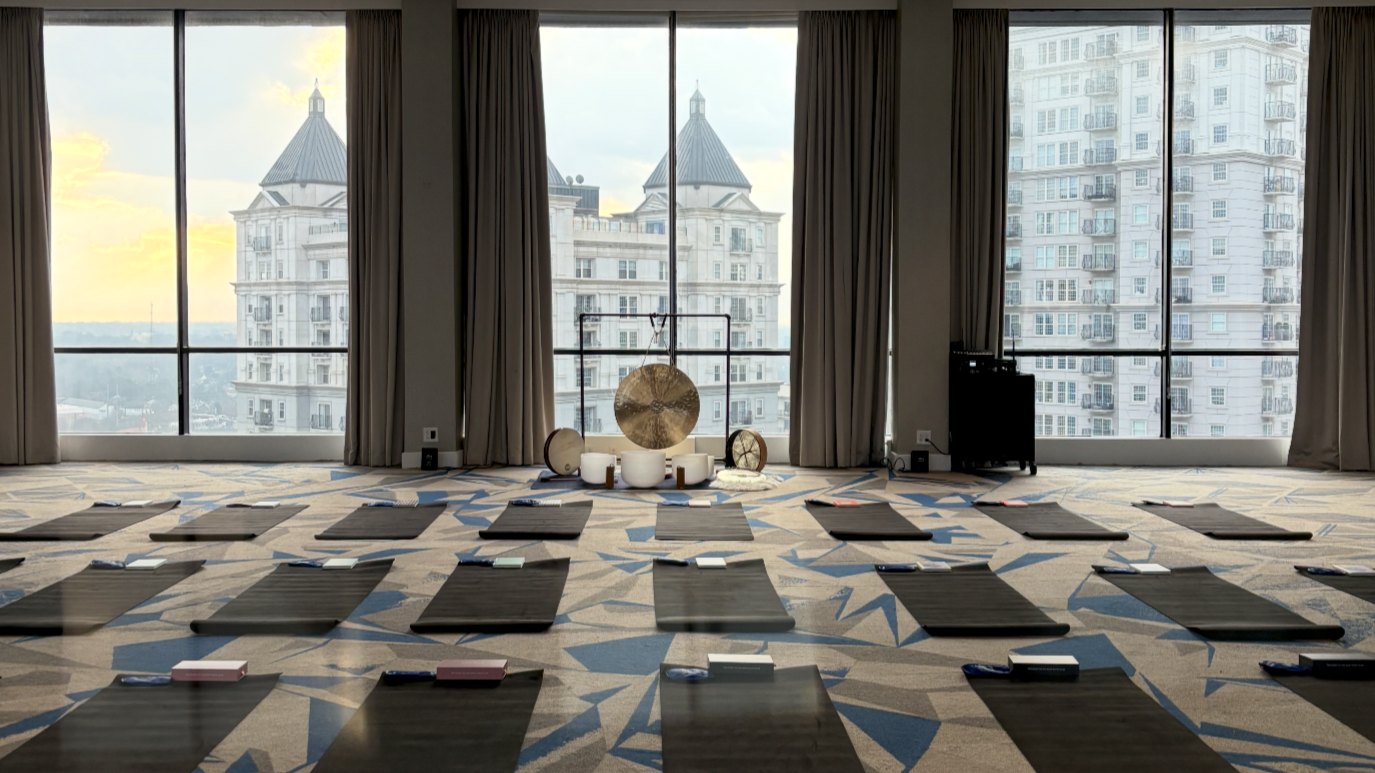
Group sound baths — 10 to 30 people in a yoga studio, retreat center, or community space — commonly run $25 to $50 per person. Ten people at $40 each is $400 for a 60-minute session. This is often where graduates begin, and many build a thriving local practice within the first year.
2. Adding Sound Healing to an Existing Wellness Business
Yoga teachers, massage therapists, life coaches, and therapists who complete a sound healing certification often find it dramatically expands their offerings and their income. Instead of replacing what they do, sound healing layers in — creating longer sessions, more distinctive offerings, and a reason for clients to keep coming back. A yoga teacher who closes a class with a 20-minute sound bath creates an experience that no other studio in their town is offering.
3. Corporate Wellness
This is one of the highest-margin applications of sound healing training. Companies book sound bath sessions for team wellness days, retreats, and monthly programming. Sessions for corporate groups typically range from $500 to $2,500 or more depending on location, group size, and customization. A single corporate client who books quarterly means significant recurring revenue. As the evidence base for sound healing grows — including research from institutions like Emory University — corporate HR leaders are increasingly open to data-informed wellness alternatives.
4. Healthcare and Therapy Settings
Certified practitioners are working in hospitals, hospices, therapy centers, integrative medicine clinics, and recovery programs. Some are hired directly as staff. Others contract as wellness providers. Some settings bill through institutional codes; others operate as supplemental programming. This is a growing space, and practitioners with professional credentials — especially those with a background in healthcare, nursing, or counseling — are particularly well-positioned. It is also where the field is heading.
5. Teaching, Training, and Building a Platform
Some graduates go on to teach workshops, build their own sound healing offerings, or develop a voice in the wellness space through content, writing, or local community programming. Sound healing is still a young field. The practitioners who enter now with solid training have the opportunity to shape what it becomes.
A Realistic Earning Picture
Income in sound healing varies widely based on location, specialty, how aggressively you build, and what you already bring to the practice. I am not going to promise you a specific number — that would not be honest, and it would depend entirely on you.
What I will say is this:
practitioners who treat this as a professional discipline — who show up consistently, communicate their value clearly, and continuously develop their skills — build sustainable practices. Those who approach it as a hobby earn accordingly.
The graduates who move fastest are the ones who already serve a specific audience. A beginner sound healer who taps into the community they are already a part of. A nurse who adds sound healing to her patient interactions. A therapist who integrates regulation tools into sessions. A yoga teacher who builds a signature Sunday sound bath. They are not starting from zero — they are expanding something that already has roots.
What SoundEmbrace Specifically Prepares You For
The SoundEmbrace 200-Hour Certification is not a performance training. It is a facilitation training — built around what is actually happening in the body when sound is used therapeutically, grounded in nervous system science, and developed in collaboration with Emory University research.
That distinction matters when you are standing in front of a corporate HR director, a hospital administrator, or a skeptical client. You will be able to explain what you do and why it works. You will know how to structure a session, how to hold space, how to lead with presence and evidence, not just intuition.
That is what opens the doors that stay closed for practitioners with performance-only training.
Ready to Begin?
The SoundEmbrace 200-Hour Sound Healing Certification is open for enrollment now. The Summer Fast Track begins June 8. The Fall Cohort begins August 10.
Explore the full program and enroll →
Dr. Danielle Hall, PhD is the founder of SoundEmbrace Institute and one of the most credentialed voices in professional sound healing education. Her work has been featured on CNN, Fox 5, and the Shift Network, and her protocols have been studied in collaboration with Emory University.